

Introduction
Patient safety is a top priority in hospitals, nursing homes, rehabilitation centers, and long-term care facilities. Among all healthcare environments, bathrooms present one of the highest risks for slips, falls, and mobility-related injuries.
For elderly residents, disabled patients, and individuals recovering from surgery, routine activities such as bathing, toileting, and transferring can become challenging without proper support.
To reduce accidents and improve patient independence, healthcare facilities invest in specialized bathroom safety equipment designed for both users and caregivers.
In this guide, we explore the most important bathroom safety products used in hospitals and nursing homes and explain how they contribute to safer and more efficient care environments.
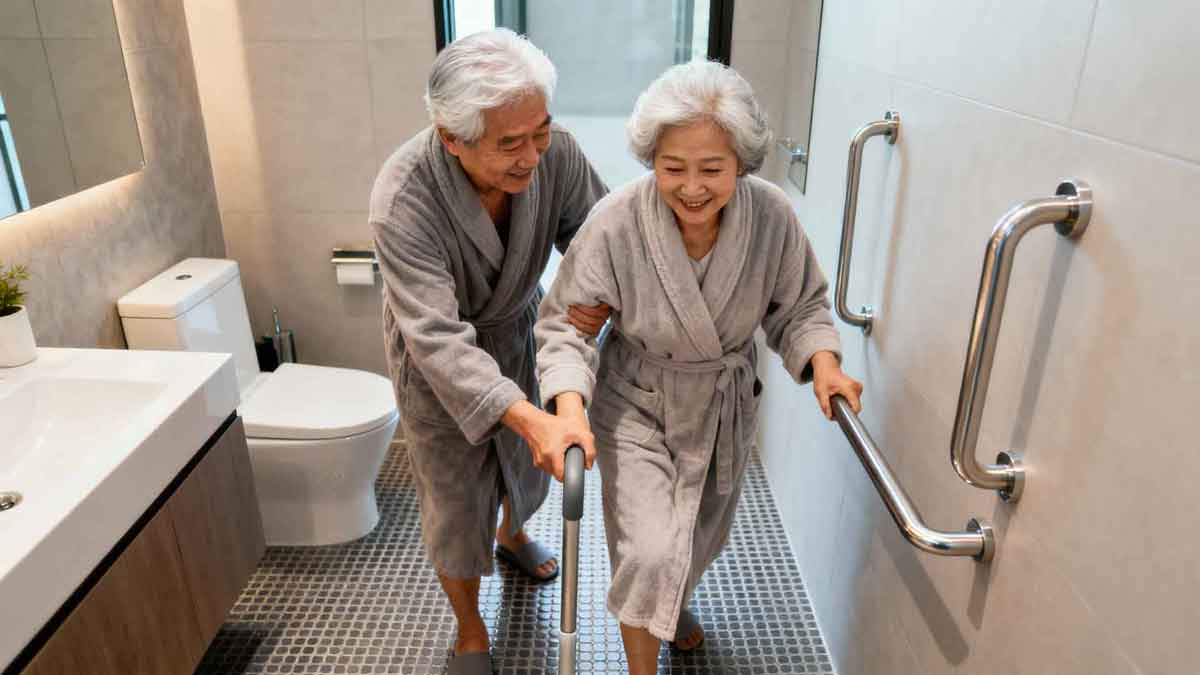
Why Bathroom Safety Matters in Healthcare Facilities
Falls remain one of the leading causes of injuries among older adults.
In healthcare environments, bathroom-related incidents can result in:
- Patient injuries
- Extended recovery periods
- Increased healthcare costs
- Reduced patient confidence
- Additional caregiver workload
Proper bathroom safety equipment helps facilities:
- Improve patient outcomes
- Reduce liability risks
- Enhance accessibility
- Support independent living
- Improve caregiver efficiency
For hospitals and nursing homes, investing in the right equipment is both a safety requirement and a long-term operational advantage.
1. Medical Grab Bars
Medical grab bars are considered the foundation of any healthcare bathroom safety program.
Installed near toilets, showers, bathtubs, and transfer areas, grab bars provide secure support for patients during movement.
Benefits of Medical Grab Bars
- Reduce fall risks
- Improve stability
- Assist patient transfers
- Support independent bathroom use
- Reduce caregiver strain
Recommended Applications
- Patient bathrooms
- Rehabilitation facilities
- Assisted living centers
- Public healthcare restrooms
Stainless steel grab bars are particularly popular due to their durability, corrosion resistance, and ease of cleaning.
2. Shower Chairs for Hospitals and Nursing Homes
Many elderly patients experience reduced balance and muscle strength, making standing during bathing difficult.
A medical shower chair allows users to remain seated while showering safely.
Benefits of Shower Chairs
- Improve bathing safety
- Reduce fatigue
- Support patient independence
- Lower fall risks
- Improve caregiver assistance
Key Features
- Adjustable height
- Non-slip feet
- Corrosion-resistant frames
- Easy-clean surfaces
Healthcare-grade shower chairs are designed to withstand frequent daily use and repeated sanitation procedures.
3. Commode Chairs
Commode chairs are among the most versatile healthcare mobility aids available.
These products provide convenient toileting support for patients with limited mobility.
Benefits of Commode Chairs
- Reduce walking distance to toilets
- Improve nighttime safety
- Support rehabilitation programs
- Enhance patient comfort
Common Applications
- Nursing homes
- Rehabilitation centers
- Hospital wards
- Home healthcare programs
Many facilities choose wheeled commode chairs to improve mobility and caregiver efficiency.
4. Toilet Assist Stands
Toilet transfers are a common challenge for elderly individuals and patients recovering from surgery.
Toilet assist stands provide stable support on both sides of the toilet.
Benefits of Toilet Assist Stands
- Improve transfer safety
- Reduce joint strain
- Support independent toileting
- Lower caregiver workload
These products are especially beneficial for patients with:
- Arthritis
- Hip replacements
- Knee replacements
- Muscle weakness
5. Fold-Up Support Rails
Fold-up support rails are frequently used in accessible healthcare bathrooms where space is limited.
Unlike traditional grab bars, these rails can be folded against the wall when not in use.
Benefits
- Space-saving design
- Enhanced wheelchair accessibility
- Improved transfer support
- ADA-compliant applications
Hospitals and nursing homes often install fold-up rails near toilets to provide additional support for wheelchair users.
6. Transfer Benches
Transfer benches help patients safely enter and exit bathtubs.
These products are particularly useful for:
- Rehabilitation patients
- Wheelchair users
- Individuals with severe mobility limitations
Benefits
- Safer bathtub transfers
- Reduced fall risks
- Increased patient confidence
- Improved caregiver assistance
Transfer benches are commonly found in rehabilitation and long-term care environments.
7. Non-Slip Flooring and Safety Accessories
Even the best equipment cannot compensate for hazardous flooring conditions.
Healthcare facilities should prioritize:
- Slip-resistant flooring
- Water drainage systems
- Safety mats
- Proper lighting
These features work together with bathroom safety equipment to create a safer environment.
Designing an Effective Healthcare Bathroom
A well-designed healthcare bathroom combines multiple safety solutions rather than relying on a single product.
Basic Nursing Home Bathroom Setup
- Medical grab bars
- Shower chair
- Non-slip flooring
Enhanced Rehabilitation Bathroom Setup
- Grab bars
- Shower chair
- Toilet assist stand
- Transfer bench
High-Dependency Care Bathroom Setup
- Fold-up support rails
- Heavy-duty grab bars
- Wheeled commode chair
- Transfer equipment
The best solution depends on patient mobility levels and facility requirements.
Benefits for Caregivers
Bathroom safety equipment is not only designed for patients.
It also helps caregivers by:
- Reducing lifting requirements
- Improving patient handling
- Lowering injury risks
- Increasing efficiency
Facilities that invest in proper equipment often experience improved staff productivity and reduced workplace injuries.
What Healthcare Buyers Should Look For
When purchasing hospital bathroom equipment, buyers should evaluate:
Durability
Products should withstand continuous daily use.
Hygiene
Materials should be easy to clean and resistant to corrosion.
Load Capacity
Equipment must safely support intended users.
Compliance
Products should meet applicable accessibility and healthcare standards.
Supplier Reliability
Consistent product quality and delivery performance are critical for healthcare procurement.
Future Trends in Healthcare Bathroom Safety
Healthcare facilities are increasingly adopting:
- Antibacterial surfaces
- Ergonomic designs
- Smart monitoring systems
- Heavy-duty bariatric equipment
- Enhanced accessibility solutions
These innovations improve both patient safety and operational efficiency.
Conclusion
Bathrooms are among the highest-risk areas in hospitals and nursing homes, making proper safety equipment essential.
Products such as medical grab bars, shower chairs, commode chairs, toilet assist stands, and transfer benches help reduce fall risks while improving independence and caregiver support.
By investing in high-quality bathroom safety equipment, healthcare facilities can create safer, more accessible environments that improve patient outcomes and enhance quality of care.
As global demand for elderly care and healthcare services continues to grow, bathroom safety solutions will remain a critical component of modern healthcare infrastructure.